Compare Room Air Cleaners Without Getting Lost in Feature Lists
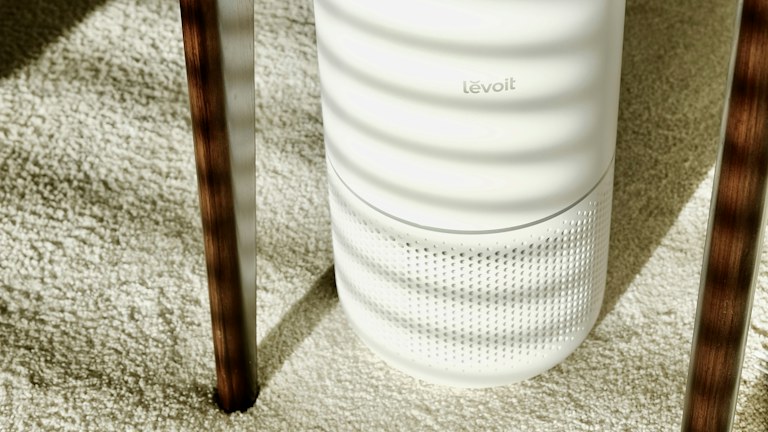
Photo: Fujiphilm / Unsplash License. Stock photograph for illustration; no product endorsement is implied.
Room air cleaners are often presented through long lists of filters, sensors and modes. A more useful starting point is the room, the concern you want to address and the maintenance you are prepared to perform. An appliance that looks capable on paper may be poorly matched to the space or too noisy at the setting needed for ordinary use.
This guide is a product-selection framework, not medical advice or a claim that a particular model has been tested. An air cleaner does not replace addressing pollutant sources or appropriate ventilation. For health concerns or unusual indoor-air problems, seek suitable professional guidance rather than relying on a shopping comparison to diagnose the issue.
In this guide
- Define the room and the intended role
- Understand what the filters are intended to capture
- Read performance ratings with their conditions
- Consider noise in the actual location
- Plan the placement before buying
- Calculate maintenance before comparing prices
- Evaluate sensors and connected features cautiously
- Review additional technologies and claims
- Check the everyday experience after purchase
Define the room and the intended role
Measure the room where the cleaner will normally operate and note its layout, ceiling height and connections to other spaces. A bedroom with a closed door differs from a large open-plan area. Product room-size claims should be read with their stated assumptions, not treated as a universal promise that the same device will perform identically in every layout.
Decide whether you need a portable appliance for one room or are evaluating the wider home's ventilation and filtration. Those are different projects. A single portable unit should not be assumed to address every room equally. Focus the comparison on the place where the device will be used and the practical conditions that affect its operation.
Understand what the filters are intended to capture
Different pollutants require different approaches. Particle filtration and gas or odor removal are not interchangeable functions. Read the manufacturer's explanation of the filter stages and their purpose, then compare that with authoritative guidance. A long list of materials in a filter does not automatically establish effective performance for every substance mentioned in marketing.
Avoid treating an odor disappearing as proof that every relevant pollutant has been removed. Likewise, the presence of a particular filter label does not answer all questions about the complete appliance. The fan, seal, airflow and suitable room size matter too. Evaluate the whole product and its documented performance rather than a single component name.
Read performance ratings with their conditions
For particle removal, standardized performance information can provide a more useful comparison than vague claims about powerful purification. Check the rating, the test context and the room-sizing guidance supplied by the manufacturer or relevant certification program. Confirm that you are comparing equivalent measures between products.
Pay attention to the operating setting associated with a claim. A device's strongest performance may occur at a fan speed that is louder than you want for sleeping or conversation. That does not make the specification meaningless, but it affects practical fit. The goal is a suitable level of performance at a setting you will actually use consistently.
Consider noise in the actual location
Think about whether the cleaner will run beside a bed, near a desk or in a shared living space. Noise tolerance varies with the activity and the character of the sound. A published figure can help, but measurement conditions and fan settings matter. Look for information that distinguishes operating modes rather than one unexplained noise number.
Do not assume a quiet sleep mode delivers the same airflow as the highest setting. If the device will spend most of its time in a low mode, consider whether that mode suits the intended room. A product that remains switched off because it is intrusive offers little practical value, regardless of what it can achieve under a laboratory setting.
Plan the placement before buying
Read the required clearances and airflow instructions. A cleaner needs a suitable location where furniture and curtains do not obstruct it. Measure the available floor or surface area and account for access to the filter compartment. A device that fits visually into a narrow corner may not be able to operate there as instructed.
Check the cable route and whether the location interferes with walking paths, doors or cleaning. If you intend to move the appliance between rooms, consider weight, handles and the need to reset it in a suitable position each time. Portability is useful only if the device remains practical to place and operate wherever it is moved.
Calculate maintenance before comparing prices
Identify the exact replacement filters, their current availability and the manufacturer's maintenance guidance. Replacement frequency can depend on use and conditions, so avoid assuming one interval applies to every home. Compare the likely ongoing cost alongside the initial purchase, and check whether the filters are proprietary or available through a dependable supply route.
Read which parts can be cleaned and which must be replaced. Do not wash a filter unless the manufacturer explicitly permits it. A maintenance indicator can be helpful, but understand whether it measures a condition or simply tracks time. Keeping the appliance in its intended condition is part of the product choice, not an optional extra after purchase.
Evaluate sensors and connected features cautiously
Automatic modes and displays can make operation convenient, but find out what the sensor measures and what the displayed value represents. A single sensor reading is not a complete assessment of indoor air. Avoid interpreting a green indicator as a medical assurance or proof that every possible concern has been resolved.
If an app is involved, check account requirements, privacy settings and whether basic operation remains available without it. Physical controls can be important in a shared household. Choose connected features because they support a routine you want, not because a detailed dashboard automatically means the appliance performs better at its core task.
Review additional technologies and claims
Read authoritative guidance before selecting products that intentionally generate ozone or make broad sterilization claims. The U.S. EPA advises caution about ozone-generating air cleaners and explains the limits of portable filtration. Do not infer that a dramatic description of a technology establishes that it is appropriate for an occupied home.
Look for precise, verifiable claims and clear instructions rather than promises to eliminate every problem. Certifications should be checked for what they actually cover. A certification related to electrical safety, for example, is not necessarily proof of every air-cleaning claim made in advertising. Keep the purpose of each piece of evidence distinct.
Check the everyday experience after purchase
Set up the device according to its instructions and assess controls, noise, placement and maintenance access during normal use. This is a usability check, not a home laboratory test of pollutant removal. Do not deliberately introduce contaminants to see whether the sensor responds. If you need a formal assessment, use an appropriate professional route.
A good choice combines documented suitability for the room with a routine you can sustain. Clear performance information, tolerable operation and accessible replacement filters matter more than a crowded feature list. Keep source control and ventilation in the wider plan, and judge the appliance as one part of that plan rather than a complete solution to every indoor-air concern.