A Beginner's Guide to Choosing Binoculars for Everyday Outings
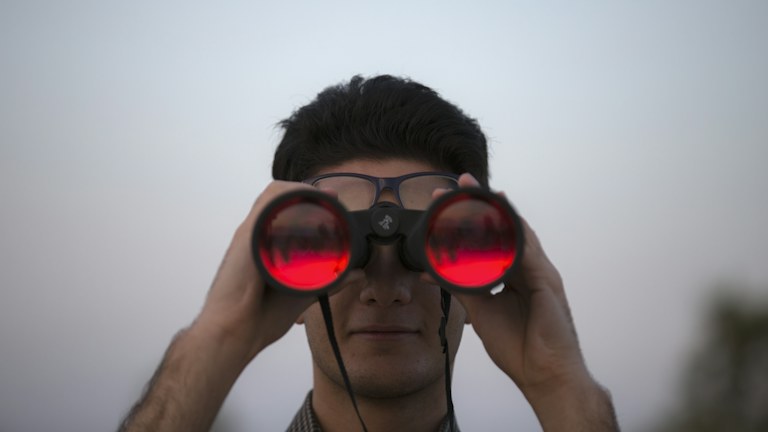
Photo: mostafa meraji / Unsplash License. Stock photograph for illustration; no product endorsement is implied.
Binoculars can make a park visit, a landscape view or a birdwatching walk more engaging, but choosing them by the largest magnification figure can be disappointing. The ability to find a subject, hold the image steady and use the instrument comfortably matters as much as how large the subject appears. A balanced choice begins with where and how you expect to look.
This guide explains the main comparisons without claiming hands-on tests of particular models. Verify current specifications through the manufacturer and try suitable examples when possible. Never look at the sun through ordinary binoculars; this guide concerns everyday terrestrial viewing, not solar observation or specialized optical equipment.
In this guide
- Understand the two main numbers
- Choose magnification you can use steadily
- Compare field of view for moving subjects
- Check comfort with glasses if you wear them
- Test focusing and adjustment controls
- Consider close focus for your interests
- Match size and carrying method to the outing
- Read protection and maintenance guidance
- Compare complete views, not just specifications
Understand the two main numbers
Binoculars commonly display a pair of numbers describing magnification and objective-lens diameter. These figures help identify the basic design, but they do not provide a complete measure of image quality or comfort. The same nominal numbers can appear on products with different fields of view, focusing behavior and physical characteristics.
Use the numbers to narrow the category, then compare the rest of the specification. Avoid assuming that a larger second number or higher magnification is automatically the better purchase. Both can involve tradeoffs in size, handling and the kind of view you obtain. A useful instrument should fit the outing and remain comfortable to carry and operate.
Choose magnification you can use steadily
Higher magnification makes distant detail appear larger, but it can also make hand movement more noticeable and finding a subject more demanding. Consider whether you will view while standing, sitting or using support. A compact instrument that is difficult to hold steady may reveal less useful detail in practice than a more manageable alternative.
Try looking at the same ordinary distant subject through several suitable options if possible. Notice how quickly you can locate it and how comfortably you can maintain the view. Do not judge only by the first impression of enlargement. The practical value comes from a stable, usable view over the time you actually spend observing.
Compare field of view for moving subjects
Field of view describes how much of the scene you can see through the binoculars under the specified conditions. A wider view can help when locating or following movement, while other optical priorities may influence the design. Compare equivalent measurements and read the manufacturer's explanation if the units differ between listings.
For casual birdwatching or sports, finding the subject quickly may be especially important. A narrow view can feel restrictive even when the central image is impressive. For more static observation, your priorities may differ. Think about the activity rather than treating one field-of-view number as the only mark of a good instrument.
Check comfort with glasses if you wear them
Eye relief and eyecup adjustment affect how you position your eyes and see the full view. If you wear glasses, try the binoculars with the glasses you normally use outdoors. Do not assume that a specification alone guarantees a comfortable fit for every frame and face shape.
Adjust the eyecups according to the instructions and check whether you can see a clear, complete view without pressing awkwardly against the instrument. Also confirm that the distance between the barrels can be set appropriately for your eyes. Comfort at the eyepieces is fundamental; an attractive optical specification is less useful if you cannot hold the viewing position naturally.
Test focusing and adjustment controls
The focus control should be easy to locate and turn with suitable precision. Try moving between nearer and farther subjects within the instrument's intended range. If you plan to use gloves, consider whether the control remains manageable. A very small or stiff wheel can be inconvenient even when the optics otherwise suit you.
Learn the manufacturer's procedure for any diopter adjustment or other individual-eye setting. Set it deliberately rather than continually compensating with the main focus wheel. Keep the instructions available until the process is familiar. A correctly adjusted instrument provides a fairer basis for comparison than one that has been passed between several people without resetting it.
Consider close focus for your interests
Not every interesting subject is far away. If you enjoy observing flowers, insects or nearby details, check the close-focus specification and try a representative distance. A binocular chosen only for distant scenery may not support the close viewing you later discover you enjoy.
Balance this with the other requirements rather than choosing on close focus alone. A person mainly watching distant wildlife may prioritize different characteristics from someone exploring a small garden. The best purchase supports the subjects that motivate you to carry the binoculars in the first place.
Match size and carrying method to the outing
Check weight, dimensions and how the binoculars feel with a strap or harness. A larger instrument may be comfortable for a short stationary session but less appealing during a long walk. Conversely, a very small design can be harder for some hands to grip steadily. Portability and handling are related but not identical.
Consider the case and lens covers as part of the routine. They should protect the instrument without making it frustrating to take out when a subject appears. A binocular left in the bag because it is cumbersome offers little benefit. Choose a carrying arrangement that makes appropriate use easy while protecting the optics between observations.
Read protection and maintenance guidance
If the instrument will be used outdoors, check weather-resistance claims and their limits. Water resistance, internal fog resistance and impact protection describe different things. Do not treat any one label as permission to expose the binoculars carelessly. Follow the manufacturer's guidance about moisture, storage and handling.
Clean the lenses only through appropriate methods and materials. Removing grit carelessly can damage surfaces. Keep the product instructions and use support advice when unsure rather than applying a household cleaner because it works on another object. Proper care helps preserve the viewing experience and can matter more than an accessory bundle advertised with the purchase.
Compare complete views, not just specifications
During an appropriate return or demonstration period, view familiar subjects at several distances and check comfort over more than a few seconds. Notice focusing, steadiness, edge behavior and whether the instrument is enjoyable to use. Compare under similar conditions so lighting and adjustment do not dominate the result.
A good beginner's choice encourages you to look more often because it is easy to carry, find subjects with and hold comfortably. Magnification remains part of the decision, but it should serve that experience. The most useful binoculars are the ones that fit your eyes, hands and outings rather than the largest numbers in a product listing.