Choose an Electric Kettle Around Pouring, Cleaning and Capacity
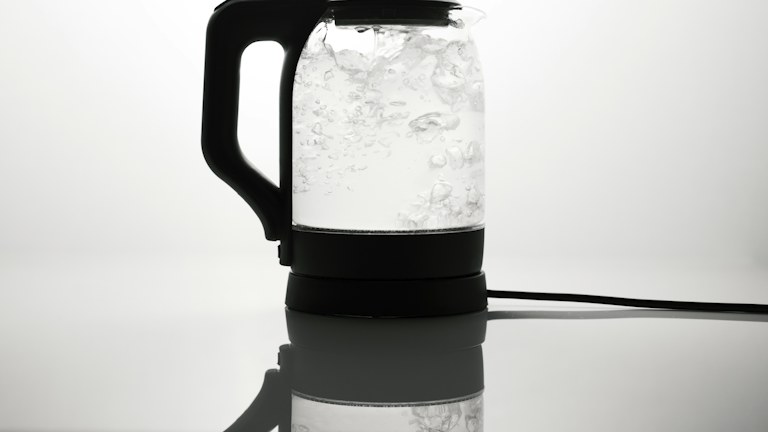
Photo: engin akyurt / Unsplash License. Stock photograph for illustration; no product endorsement is implied.
An electric kettle is a simple appliance, yet the parts you interact with every day can vary considerably. The handle may feel comfortable until the kettle is full, the water window may be difficult to read, or the lid opening may make cleaning awkward. Choosing well means looking beyond how quickly the product page says water can boil.
This is a buying framework, not a hands-on comparison of named models. Check the exact kettle's instructions, electrical requirements and intended use before purchase. Stock photography illustrates the category and does not imply testing or endorsement of the pictured appliance.
In this guide
- Estimate your normal amount of water
- Check the handle and balance when pouring
- Examine the lid and filling route
- Make the fill level easy to see
- Decide whether temperature controls are useful
- Consider materials and cleaning access
- Review the base and cable arrangement
- Compare safety features without treating them as permission
- Evaluate the complete routine
Estimate your normal amount of water
Think about how many cups you usually prepare and how often you need a larger batch. Compare those habits with the kettle's minimum and maximum fill levels. A large capacity can be useful for several people, but a smaller household may value manageable weight and a suitable low minimum fill more often.
Include the cup sizes you actually use rather than relying on a vague number of cups in advertising. Do not fill below or above the manufacturer's permitted limits. The useful capacity is the range that fits ordinary use safely and conveniently. A kettle selected only for occasional guests may be less comfortable during the much more frequent one-person routine.
Check the handle and balance when pouring
Handle shape, clearance and the kettle's center of gravity affect control. If possible, hold the model and consider its weight with water added. The empty appliance may feel light while the full load is much less manageable. A grip that works for one person may not suit another person's hand size or mobility.
Look at the pouring angle and where your wrist would be when directing water into the containers you use. A narrow mug, a teapot and a coffee brewer can require different control. Do not assume a specialized spout is necessary for every task, but do consider whether the design supports your routine without awkward lifting or twisting.
Examine the lid and filling route
A wide, accessible opening can make filling and cleaning easier. Check how the lid opens and whether the release control is straightforward. Consider the space under your tap and the clearance beneath cupboards. A kettle that looks compact on the counter may still be inconvenient to fill if the lid or handle interferes with the available space.
Read the instructions for opening and refilling after heating. Steam and hot surfaces require appropriate handling, and a design should make those steps clear. Avoid improvising a filling method because the opening is awkward. If ordinary use feels difficult, that is a valid reason to choose a different design rather than adapting around the appliance every day.
Make the fill level easy to see
Look for clear minimum and maximum markings and consider whether they are visible while filling. An external window, internal markings and an all-glass body offer different viewing experiences. Check the position relative to the handle and your usual grip. A scale hidden behind your hand may be less convenient than it appears in a product photograph.
Readability matters in different lighting conditions. Small molded markings can be hard to distinguish, especially when the kettle is wet or the kitchen is dim. If more than one person will use the appliance, consider their needs too. Clear markings support consistent use and are more practical than guessing the level from the sound or weight of the water.
Decide whether temperature controls are useful
A basic kettle may be sufficient if your main requirement is boiling water. Variable-temperature models can suit routines that call for different preparation temperatures, but the interface and accuracy claims should be evaluated carefully. Determine whether the available settings match your intended use and whether the controls are easy to understand.
Keep-warm functions can be convenient, but they add behavior you should understand. Read how long the function operates, how it is activated and what happens when the kettle is lifted. Do not assume every model works the same way. Extra functions are worthwhile when they simplify a real routine, not merely because they make the control panel look more sophisticated.
Consider materials and cleaning access
The body material affects appearance, weight and how visible scale or fingerprints become. It does not by itself determine the whole ownership experience. Inspect the interior, seams and access around the heating area according to the product design. Check whether a filter is removable and how the manufacturer instructs you to clean it.
Follow the recommended descaling process for the exact appliance and your local water conditions. Do not assume every cleaning product or household method is suitable for every kettle. Easy access and clear maintenance instructions can matter more over time than a finish that looks attractive only when new. Keep electrical parts away from water as the instructions require.
Review the base and cable arrangement
Measure the space where the kettle will stand and check that the base sits stably. Consider how the cable reaches an appropriate outlet without hanging across a working area or near another heat source. Cable storage can help, but it should not encourage a strained or improvised connection.
If the kettle can be placed on its base in several orientations, check how that works with your available space and dominant hand. A familiar-looking base can still have practical differences in connector placement or fit. Use the appliance only with the supplied or manufacturer-approved base and follow the electrical requirements for your region.
Compare safety features without treating them as permission
Read the manufacturer's description of automatic shutoff and other protective functions. These features support normal use but do not replace following fill levels, placement and supervision guidance. Do not test protective systems by deliberately operating the appliance outside its intended conditions.
Check that the product and seller provide clear identification, instructions and a support route. If the appliance arrives damaged or behaves unexpectedly, stop using it and follow the appropriate return or service process. A kettle should perform a straightforward task predictably; unexplained behavior is not something to work around simply because the water eventually becomes hot.
Evaluate the complete routine
During the return period, use the kettle according to its instructions for an ordinary preparation. Notice filling, lifting, pouring, reading the controls and returning it to the base. Check whether the capacity fits your habits and whether the lid and spout are manageable. These observations are more relevant than timing a boil under conditions unrelated to your routine.
A good choice makes a frequent task uncomplicated. It fits the kitchen, feels controlled when full and remains practical to clean. Choose the features that support those needs, and let decorative style or specialized functions come after the basic experience has been established.