Choose a Kitchen Scale That Makes Everyday Cooking Easier
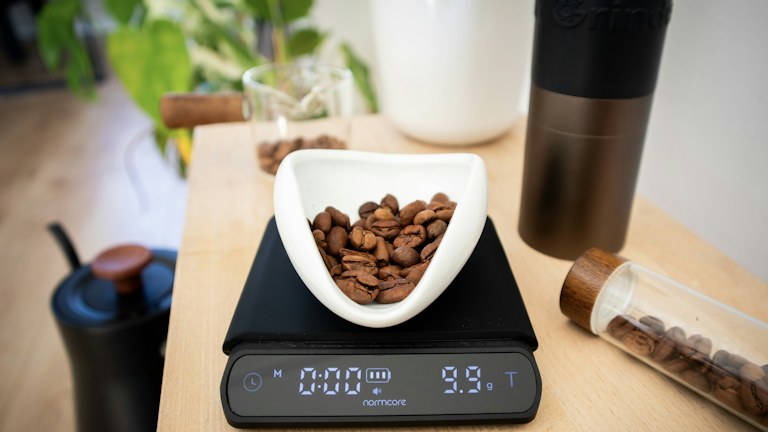
Photo: User_Pascal / Unsplash License. Stock photograph for illustration; no product endorsement is implied.
A kitchen scale is useful when it makes measuring more consistent and reduces unnecessary utensils, but not every scale suits every cooking routine. A large mixing bowl can hide the display, a quick automatic shutoff can interrupt a slow preparation, and a platform that looks generous may be difficult to clean. These everyday details often matter more than an impressive list of measurement modes.
This is a practical buying guide rather than a laboratory test of specific models. Decide what you usually weigh and compare current product documentation against those tasks. Stock photographs illustrate the category; they are not evidence that the pictured scale has been evaluated by Reviewspaul.
In this guide
- Start with the ingredients and quantities you use
- Understand resolution and accuracy as different ideas
- Check tare behavior and controls
- Make sure you can see the display
- Consider timing and automatic shutoff
- Look at cleaning and storage
- Compare power and maintenance needs
- Plan a useful home check
- Choose the simplest scale that meets the job
Start with the ingredients and quantities you use
List typical tasks such as baking, portioning dough, weighing vegetables or measuring coffee. Note the smallest and largest amounts you regularly need. A general kitchen scale can be suitable for ordinary ingredients while a specialized small-quantity task may require a different instrument. Do not assume one device is equally appropriate for every quantity simply because it displays a unit you recognize.
Include the container's weight in your capacity planning. A heavy bowl uses part of the scale's total load capacity even when the tare function makes the displayed ingredient weight return to zero. Check the manufacturer's stated limit and leave a sensible margin for the bowls and ingredients you actually use. Avoid overloading the scale to test its durability.
Understand resolution and accuracy as different ideas
Resolution describes the increments shown on the display; it does not by itself prove how accurately the device measures. A scale that shows small increments may still have limitations that matter near the bottom of its range. Look for clear specifications and testing information rather than treating an extra decimal place as a guarantee of precision.
Choose a device appropriate to ordinary food preparation and follow its intended use. A kitchen scale should not be repurposed for tasks requiring specialized medical, scientific or trade measurement assurance. For cooking, consistency and a suitable working range are often more useful than a display that appears extremely precise without supporting documentation.
Check tare behavior and controls
The tare function lets you subtract the container or add ingredients sequentially, but the controls should be easy to operate with a bowl in place. Look for a clear response and buttons that do not require awkward pressure near the loaded platform. If the same button performs several functions, consider whether the sequence is easy to remember during cooking.
Test how the display behaves when adding ingredients gradually. A slow response can make it easier to overshoot a target amount. Do not deliberately spill ingredients onto controls to test them, but inspect whether ordinary flour, crumbs or damp fingers will make the design inconvenient. A simple interface can be an advantage when several tasks compete for attention.
Make sure you can see the display
Consider the bowls, plates and trays you will place on the scale. A wide container can extend over a small platform and obscure the numbers. Some designs offer an extended or movable display, while others rely on a larger platform or a different viewing angle. Measure your commonly used bowl rather than judging the scale from an image without context.
Readability includes contrast, digit size and lighting. Check the display from your normal working position, including when the scale sits farther back on the counter. A bright display is not automatically better if it is difficult to read at an angle. The useful test is whether you can see the value clearly while adding an ingredient without lifting the container.
Consider timing and automatic shutoff
An automatic shutoff can preserve battery life, but its timing may interfere with slower tasks. If the scale turns off while you search for an ingredient, you may lose the current measurement context. Check whether the manufacturer specifies the behavior and whether it differs with an active load or a tare operation.
For a task such as gradual coffee preparation, controls and timing may be more important than extra weight units. For ordinary baking, a dependable tare process and enough time between additions may be sufficient. Choose based on the sequence you actually perform rather than paying for a specialized mode that does not support your normal routine.
Look at cleaning and storage
A flat surface can be easy to wipe, but seams around buttons and the platform can collect ingredients. Read the cleaning instructions and do not assume the device can be rinsed or submerged. Removable covers or platforms may help if the manufacturer designs them for that purpose, but they also create parts to keep track of.
Consider where the scale will live. A very thin model may store easily, while a larger stable platform can be more convenient for frequent use. Avoid storing heavy objects on it unless the instructions permit that. A protective storage location helps preserve the platform and keeps the device ready without turning every measurement into a search through a crowded drawer.
Compare power and maintenance needs
Check the battery type or charging arrangement and whether replacements are easy to obtain. A rechargeable scale may reduce disposable battery use but requires a charging routine. A replaceable-battery design can be convenient if suitable batteries are already part of the household's supplies. Neither approach is automatically more reliable for every user.
Read any calibration or verification instructions provided by the manufacturer. Do not improvise calibration with objects whose exact weight you do not know. If a scale gives inconsistent readings, first check the surface, power condition and setup instructions. Use the support or return route when appropriate rather than assuming that an unexplained adjustment has repaired the measurement.
Plan a useful home check
Place the scale on a stable, level surface and follow its startup instructions. Use the same safe object several times to observe consistency, then try the bowls and ordinary quantities you expect to measure. Repeated agreement does not prove absolute accuracy, but it can reveal unstable behavior or a poor fit for the way you cook.
Check the tare function, display visibility and shutoff behavior during a real preparation. Keep packaging and purchase information while you evaluate the device. If a bowl consistently blocks the display or the controls interrupt the task, that is a meaningful compatibility problem even if the scale meets its stated capacity.
Choose the simplest scale that meets the job
A strong everyday choice has an appropriate range, readable display, predictable controls and a surface you can maintain easily. Specialized functions can be useful when they match a real task, but they should not distract from those basics. Compare the complete experience rather than selecting by the number of modes or the smallest displayed increment.
The scale earns its place when it helps you measure with less uncertainty and fewer interruptions. Keep the instructions available, use it within its intended range and reconsider the setup if your cooking routine changes. Practical fit is the feature you will notice at every use.