Choose an Induction Pan by Base, Handle and Cooking Style
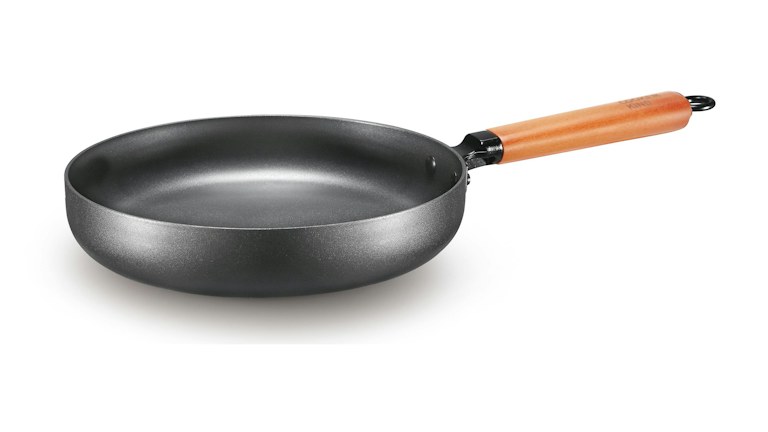
Photo: Cooker King / Unsplash License. Stock photograph for illustration; no product endorsement is implied.
A pan can be labeled suitable for induction and still be an awkward choice for your kitchen. It may be too small for the cooking zone, too heavy when full or uncomfortable to move with an oven glove. Induction compatibility is the starting requirement, not the whole buying decision. The useful comparison includes the cooktop, the food you prepare and the way you handle the pan.
This guide offers selection criteria rather than hands-on rankings of specific cookware. Verify the exact pan's current specifications and your cooktop's instructions before purchase. A stock photograph of a pan does not establish its compatibility, coating, temperature limits or performance.
In this guide
- Confirm compatibility with the exact cooktop
- Choose size around actual portions
- Understand construction as a set of tradeoffs
- Match the cooking surface to the food
- Pay attention to the handle
- Check flatness and stability
- Compare lids, rims and pouring behavior
- Consider the whole ownership cost
- Evaluate an ordinary meal after purchase
Confirm compatibility with the exact cooktop
Check the pan manufacturer's induction designation and the cooktop's guidance about cookware. A magnetic base is relevant to induction operation, but a quick magnet check does not answer every question about dimensions, construction or how the cooktop detects the pan. Use it as a clue, not a complete compatibility guarantee.
Read any minimum and maximum base-size guidance for the cooking zone you expect to use. The pan's advertised diameter may refer to its rim rather than the flat base. Those measurements can differ substantially on a sloped frying pan. Record the base dimensions when possible so you are comparing the part that interacts with the cooking surface.
Choose size around actual portions
Think about the amount of food you cook at once and the space it needs. A pan that is too small can crowd ingredients, while a much larger pan may be heavy and awkward on your available zone. Consider the flat cooking area rather than assuming every pan with the same rim diameter offers the same usable space.
Include storage, sink size and the way the pan moves between them. A large pan may cook a family portion comfortably but be difficult to wash in a small sink. If you often cook one portion, a smaller compatible pan can be more convenient. Choose for the ordinary meal rather than the largest meal you might prepare once a year.
Understand construction as a set of tradeoffs
Different constructions balance weight, heating behavior, maintenance and price. A layered metal pan, a cast-iron pan and a coated pan can all suit particular tasks without being interchangeable. Read the material description carefully, including whether the induction-compatible material is part of the whole body or a separate base construction.
Avoid treating thickness or weight as a universal quality score. A heavier pan may feel stable but be difficult to lift when full. A lighter pan may be easier to handle while behaving differently during cooking. The right choice depends on the food, the user's strength and the cooking routine, not a single material preference repeated across every kitchen.
Match the cooking surface to the food
Consider whether you mainly cook eggs and delicate foods, sear ingredients, prepare sauces or use a mixture of techniques. Coated and uncoated surfaces have different care requirements and may suit different priorities. Check the manufacturer's instructions for utensils, cleaning and permitted cooking conditions rather than assuming all surfaces in a category behave identically.
Think about how you prefer to maintain cookware. Some people are happy with a more involved care routine; others need a pan that fits a quick everyday cleanup. A surface that requires habits you are unlikely to follow may be a poor purchase even if it performs well under ideal conditions. Choose a maintenance commitment as well as a cooking tool.
Pay attention to the handle
The handle affects control when the pan is empty and when it contains food. Check its shape, length, angle and connection to the body. If possible, hold the pan and imagine lifting it with the amount of food you normally cook. A comfortable grip should not depend on balancing an unexpectedly heavy load at an awkward angle.
A helper handle can be useful on larger pans, but it also occupies space and needs clearance. Verify any claims about heat resistance or oven use for the complete pan, including handles and lids. Do not infer an oven limit from the metal body alone. Follow the manufacturer's stated conditions and use appropriate protection when handling hot cookware.
Check flatness and stability
The base should sit appropriately on the intended cooking surface. Inspect a new pan for visible damage or instability and follow the seller's process if something appears wrong. Do not attempt to reshape cookware to make it fit. A pan that rocks or does not contact the surface as intended can be inconvenient even before considering cooking performance.
Read guidance about moving cookware across a glass surface. Lifting rather than dragging may help avoid damage, but the cooktop's own instructions should govern use. Keep the base clean and inspect it for material that could affect the surface. Good compatibility includes the way the pan is handled, not only whether the cooktop recognizes it.
Compare lids, rims and pouring behavior
If you need a lid, check whether it is included and whether its dimensions and use limits match the pan. A generic lid may fit approximately while behaving differently during cooking. Consider whether you need to see the food through the lid, store it compactly or move it into the oven under the manufacturer's permitted conditions.
Rim shape and pouring lips can affect transferring sauces or food. Look at the direction and position of any pouring feature relative to your dominant hand. These details may seem minor on a product page but become noticeable during repeated use. A pan should support the complete task, including serving and cleaning, rather than only the heating stage.
Consider the whole ownership cost
Compare the pan, any required lid and the maintenance supplies it needs. Read warranty terms and understand what they cover. Normal wear, misuse and manufacturing faults may be treated differently. Keep the model information and receipt so support can identify the product accurately if a problem develops.
Avoid buying a large set solely because the price per piece looks attractive. Count the pieces you will actually use and check whether several lids or utensils inflate the advertised piece count. A smaller selection that fits your cooktop and cooking habits can be more useful than a cupboard full of overlapping sizes.
Evaluate an ordinary meal after purchase
Follow the pan and cooktop instructions with a familiar recipe. Observe handling, usable cooking area, cleanup and whether the pan fits the intended zone as expected. Do not begin with an extreme heat test or an unfamiliar technique that makes it difficult to distinguish cookware behavior from the recipe itself.
The right induction pan meets the compatibility requirement and feels practical through the whole meal. It should be manageable to lift, appropriate for the portions you cook and realistic to maintain. Those qualities are more dependable buying criteria than a dramatic claim that one material or construction is best for every cook.