Choose a Portable Speaker for Where You Will Actually Use It
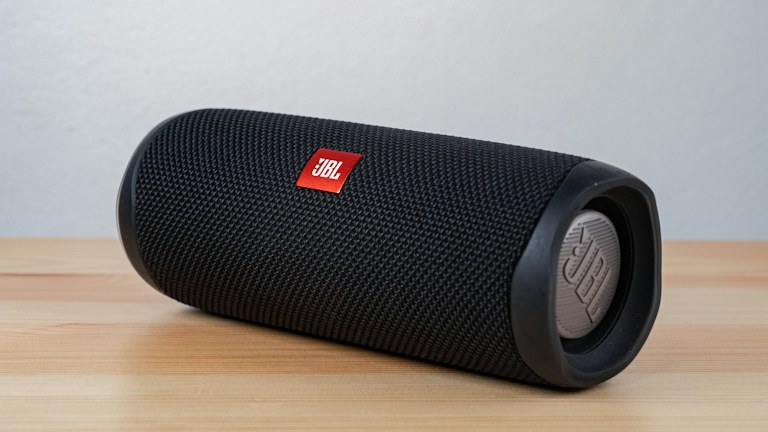
Photo: Nejc Soklič / Unsplash License. Stock photograph for illustration; no product endorsement is implied.
A portable speaker can mean a small device moved between rooms, a companion for a picnic or equipment carried to a larger outdoor gathering. Those settings have different requirements. Choosing by maximum loudness or an advertised battery figure can overlook whether the speaker is easy to carry, simple to control and suitable for the place where it will spend most of its time.
This guide provides a practical comparison method rather than hands-on rankings of specific models. Check current specifications and instructions for the exact product. Stock photographs illustrate the category and do not imply that the pictured speaker has been tested or endorsed.
In this guide
- Define the ordinary listening situation
- Balance size, weight and useful sound
- Read battery claims with their assumptions
- Understand protection ratings and care
- Check controls in real conditions
- Treat multi-speaker features as ecosystem choices
- Consider applications and connected features
- Inspect carrying and placement details
- Run an everyday acceptance test
Define the ordinary listening situation
Write down where you will use the speaker, how many people need to hear it and what you usually play. A quiet room, a balcony and an open park do not behave alike. Spoken audio may place different demands on clarity from music intended to fill a social space. Start with the common situation rather than the most demanding event you might attend once.
Consider whether headphones would better suit some uses, especially in shared public spaces. A speaker's ability to play loudly does not establish that loud playback is appropriate. Choose equipment and volume with the people around you in mind. The practical goal is enjoyable listening in the intended setting, not using every available degree of output.
Balance size, weight and useful sound
A larger speaker may provide capabilities that a smaller one cannot, but it is also more to carry and store. Check dimensions and weight with the charging equipment or carrying case you expect to take. A device described as portable may be convenient for moving around a house while being less attractive for a long walk.
If possible, listen to familiar material at the level you would normally use. A brief loud demonstration can exaggerate differences and hide weaknesses in ordinary speech or quieter music. Judge clarity and balance in context. Do not assume that the deepest bass or greatest output is the most useful characteristic for every room or activity.
Read battery claims with their assumptions
Published battery life depends on conditions such as playback level, features and content. Check the manufacturer's stated test conditions and compare them with your routine. A headline duration is not a guarantee for every setting. Lighting effects, charging another device or other optional functions may affect the experience, depending on the model.
Consider charging time and connector convenience as well as duration. If the speaker is used occasionally, a simple reminder to charge before an outing may matter more than a small difference in claimed runtime. For frequent use, check whether its charging arrangement fits the cables and supplies you already carry without assuming every similar-looking connection supports the same behavior.
Understand protection ratings and care
If the speaker will be used outdoors or near water, read any protection rating and its conditions carefully. Water resistance, dust resistance and impact resistance are different claims. A product suitable for one type of exposure is not automatically protected against every accident, chemical or prolonged condition.
Follow the care instructions after permitted exposure and before charging. Do not deliberately test limits by submerging or dropping the device. A protective design should support appropriate use, not encourage careless handling. Also consider whether ports need covers and whether those covers are easy to close correctly during the activities you have in mind.
Check controls in real conditions
Physical buttons should be understandable and usable in the setting where the speaker will operate. Small touch controls may be less convenient when you cannot look closely or when the device is placed out of reach. Check how volume, playback, pairing and power are distinguished. Clear feedback can prevent repeated button presses that trigger an unintended mode.
If several people will use the speaker, consider how easy it is to connect a new device and disconnect an old one. A complicated pairing history can become frustrating in a shared household. Review whether the speaker supports the connection behavior you need and how it handles switching between sources. Simplicity may be more valuable than rarely used advanced controls.
Treat multi-speaker features as ecosystem choices
Some products can pair with another speaker for stereo or group playback, but compatibility may be limited to particular models, generations or software versions. Check the exact requirements rather than assuming that two products from the same brand will work together. The intended mode can also affect how many sources or speakers are supported.
Buy a single speaker that meets your current needs unless expansion is a realistic plan. An attractive future pairing feature is less valuable if compatible units are difficult to find later. Keep model information and current documentation when the ecosystem matters to the purchase. Optional expansion should add flexibility rather than become the only reason the initial device seems worthwhile.
Consider applications and connected features
An app may provide useful equalization, updates or configuration, but determine which functions require it. Basic playback should fit your expectations even when a phone has no data connection or an account is unavailable. Review permissions and privacy settings through the provider's current information where connected services are involved.
Voice-assistant and network features introduce different requirements from ordinary portable playback. If those capabilities are central, verify that they work in the intended location and on the available network. If they are not needed, a simpler product may reduce setup and maintenance. More connected features do not necessarily improve the core experience of playing familiar audio reliably.
Inspect carrying and placement details
A handle, strap or stable base can influence daily convenience more than it appears in a specification table. Check whether a carrying feature feels secure and whether the speaker remains stable on the surfaces you expect to use. Consider where it will sit without blocking paths or being placed near an edge.
Look at how the charging port and controls remain accessible in the normal position. If you intend to pack it with other items, protect it from objects that could press buttons or damage connectors. Choose a size that fits the actual bag or shelf rather than assuming portability from a photograph without scale.
Run an everyday acceptance test
During the return period, pair the speaker with your main device, play familiar music and speech at ordinary levels, and test the controls and charging routine. Use only conditions permitted by the manufacturer. Notice whether the connection is dependable in the intended arrangement and whether the sound remains pleasant at the volume you normally choose.
The right portable speaker fits a place, a listening habit and a carrying routine. It should be easy to use when you want audio and easy to put away afterward. A focused comparison based on those needs is more dependable than buying the loudest or most heavily featured model and adapting every outing around it.